

AK-47 vs. AK-74
AK-74 vs. AK-47: A Comprehensive Comparison of Kalashnikov’s Icons
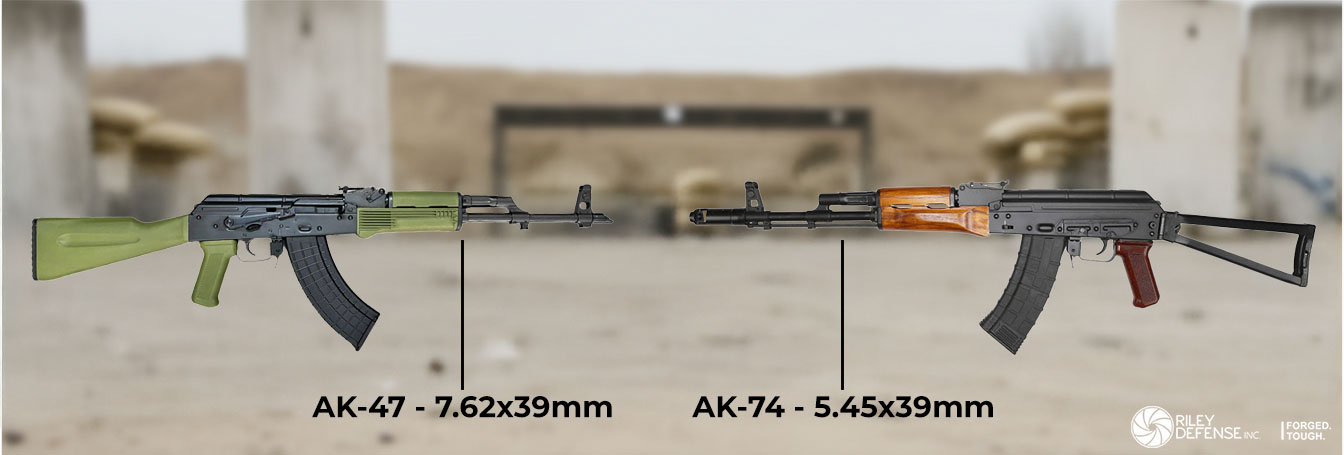
In the world of firearms, few names command as much respect and recognition as Kalashnikov. The AK-47, a symbol of rugged reliability and revolutionary firepower, is arguably the most famous rifle ever created. Yet, its successor, the AK-74, represents a significant evolution in Soviet military doctrine and small arms design. While they share a common lineage, these two icons were born from different philosophies and engineered for different battlefield realities. This article provides a detailed, head-to-head comparison for knowledgeable enthusiasts, collectors, and potential buyers trying to decide between these legendary platforms. We will dissect the critical distinctions, from caliber and handling to performance and practical use, and also touch upon the crucial intermediary model, the AKM, which bridges the gap between these two generations.
Understanding the Kalashnikov Legacy: AK-47, AKM, and AK-74 Overview
To truly understand the AK-74 vs. AK-47 debate, one must first appreciate the historical context and the evolutionary steps that connect them. The story isn’t just about two rifles; it’s about a continuous process of refinement driven by battlefield experience and technological advancements. The journey from the original AK-47 to the modernized AKM and finally to the AK-74 reflects a major shift in military thinking.
The Original: Avtomat Kalashnikova 1947 (AK-47)
Designed by Mikhail Kalashnikov in the years following World War II, the AK-47 was officially adopted by the Soviet military in 1949. Its purpose was to provide Soviet infantry with a simple, robust, and reliable select-fire rifle that could function in the harshest conditions, from the frozen mud of Eastern Europe to the sands of the Middle East. Early models (Type 1, 2, and 3) were characterized by their milled receivers, which were machined from a solid block of steel. This made them incredibly durable but also heavy and slow to manufacture. Chambered in the powerful intermediate 7.62x39mm cartridge, the AK-47 delivered formidable firepower at common engagement distances. Its unparalleled reliability and simple operation led to its proliferation across the globe, making it an enduring symbol of armed conflict and liberation movements alike.
The Modernization: AKM (Avtomat Kalashnikova Modernizirovanniy)
By the late 1950s, Soviet engineers sought to improve the AK-47’s design, not by replacing it, but by refining it. The result was the AKM, or “Modernized Kalashnikov Automatic Rifle,” introduced in 1959. The single most important change was the switch from a heavy milled receiver to a lighter, more cost-effective stamped sheet metal receiver. This innovation, along with other minor changes, shaved about a pound off the rifle’s weight and drastically simplified mass production. The AKM also introduced the iconic slant-cut muzzle brake to help mitigate muzzle climb during automatic fire. While it retained the same 7.62x39mm caliber and legendary reliability, the AKM is the most common variant often mistaken for the original AK-47. The AK-47 vs AK-74 vs AKM comparison highlights the AKM as the critical link, perfecting the original design before the next great leap.
The Successor: Avtomat Kalashnikova 1974 (AK-74)
The development of the AK-74 was a direct response to the United States’ adoption of the M16 and its small-caliber, high-velocity 5.56x45mm cartridge during the Vietnam War. Soviet tacticians recognized the advantages of a lighter round: soldiers could carry more ammunition, recoil was significantly reduced, and the flatter trajectory improved hit probability at longer ranges. Introduced in 1974, the AK-74 was chambered for the new 5.45x39mm cartridge. Built on a refined AKM-style stamped receiver, its most visually distinct feature is its large, complex muzzle brake, designed to be exceptionally effective at taming recoil and muzzle rise. The AK-74 became the standard service rifle of the Soviet Union and remains in service with the Russian Federation and many other former Eastern Bloc nations today.
Direct Comparison: Key Differences Between the AK-47 and AK-74
When you place an AK-47 (or more commonly, an AKM) next to an AK-74, the family resemblance is undeniable. However, the functional differences are profound, shaping everything from handling and ballistics to logistics. Understanding what’s the difference between the AK 47 vs AK 74 is key to appreciating each rifle’s unique strengths.
Here is a summary table for a quick AK 74 vs AK 47 caliber comparison and other key features:
Feature AK-47 / AKM AK-74 Caliber 7.62x39mm 5.45x39mm Typical Muzzle Velocity ~2,350 ft/s (715 m/s) ~2,900 ft/s (880 m/s) Receiver Type Milled (early AK-47), Stamped (AKM) Stamped Muzzle Device Bare muzzle or simple slant brake Large, two-port cylindrical brake Magazine Prominent curve, typically steel Less pronounced curve, typically Bakelite or polymer Felt Recoil Moderate to heavy push Light and soft Loaded Weight (approx.) ~9.5 lbs (4.3 kg) ~7.8 lbs (3.5 kg)
Caliber and Ammunition
The most fundamental difference lies in the ammunition. The AK-47/AKM’s 7.62x39mm is a classic intermediate cartridge. Its heavy 123-grain bullet travels slower but carries significant momentum, making it excellent at penetrating intermediate barriers like wood, brush, and some masonry. In contrast, the AK-74’s 5.45x39mm round fires a much lighter 53-grain bullet at a significantly higher velocity. The strategic shift was clear: reduce recoil, flatten trajectory, and allow the soldier to carry more rounds for the same weight. The design of the AK-74 vs AK 47 bullets also affects terminal performance; the 5.45mm bullet is notorious for its tendency to yaw and tumble upon impact with soft tissue, creating a devastating wound cavity.
Recoil and Handling
The combination of a lighter bullet and an advanced muzzle device makes the AK-74 a much softer-shooting rifle. The 7.62x39mm round produces a stout, pushing recoil that is manageable but can make rapid, accurate follow-up shots challenging for less experienced shooters. The AK-74, however, has remarkably light recoil. Its highly efficient muzzle brake vents gases sideways and forward, acting as a compensator and brake simultaneously. This drastically reduces both rearward push and muzzle climb, allowing the shooter to keep the sights on target with ease, even during rapid fire.
Magazine Design
A quick visual check of the magazine is one of the easiest ways to distinguish the two rifles. The tapered case of the 7.62x39mm round requires a magazine with a very pronounced “banana” curve to feed reliably. These magazines are traditionally made of steel. The 5.45x39mm round has much less case taper, resulting in a significantly straighter magazine profile. AK-74 magazines were famously produced in a distinctive reddish-brown “Bakelite” (an early polymer) and later in modern black or plum polymers, often featuring a “waffle” reinforcement pattern.
Performance and Practical Applications: Where Each Rifle Shines
Beyond the technical specifications, the real-world performance of these rifles dictates their ideal applications. The choice between them often comes down to a trade-off between raw power and modern shootability, directly impacting the AK 47 vs AK 74 range and effectiveness in different scenarios.
Effective Range and Accuracy
While both rifles are typically considered effective out to around 300-400 meters, the AK-74 has a distinct advantage in practical accuracy at range. The high velocity of the 5.45x39mm round results in a much flatter trajectory. This means the shooter has to account for less bullet drop over distance, simplifying aiming and increasing the probability of a hit on a man-sized target. The 7.62x39mm round has a more pronounced, rainbow-like trajectory, requiring more skill and range estimation for shots beyond 200 meters. The lighter recoil of the AK-74 also contributes to better practical accuracy, as the shooter is less likely to flinch and can recover for follow-up shots more quickly.
Terminal Ballistics and Penetration
This is where the debate often heats up. The heavy 7.62x39mm bullet is a superior penetrator of intermediate barriers. It can punch through car doors, cinder blocks, and thick vegetation more effectively than its smaller, lighter counterpart. This makes it a formidable choice in urban or wooded environments. The 5.45x39mm, while less effective against hard cover, is renowned for its terminal performance in soft tissue. The “tumble” effect, where the long, thin bullet yaws sideways upon impact, transfers its energy rapidly and creates a wide, devastating wound channel, earning it the nickname “poison bullet” from Afghan mujahideen during the Soviet-Afghan War.
Availability and Cost (Civilian Market)
In the U.S. civilian market, the 7.62x39mm platform has a significant advantage in availability and cost. Both AKM-pattern rifles and the ammunition itself are widely produced and generally more affordable than their 5.45x39mm counterparts. For many years, cheap surplus 5.45x39mm ammunition was plentiful, but import restrictions have made it scarcer and more expensive, giving the edge in economy to the classic 7.62x39mm.
Which Kalashnikov is Right for You? Making an Informed Choice
Choosing between these two legendary platforms depends entirely on your priorities as a shooter, collector, or enthusiast. There is no single “better” rifle, only the one that is better suited for your specific needs and preferences.
Strengths of the AK-47 / AKM:
- Raw Power and Penetration: The 7.62x39mm round offers excellent performance against intermediate barriers.
- Ammunition Availability: In the current market, 7.62x39mm is generally cheaper and more widely available.
- Historical Significance: Owning an AKM is owning a piece of history. It is the most recognizable and prolific firearm design in the world.
- Proven Reliability: The platform’s reputation for functioning in any condition is legendary and well-earned.
Strengths of the AK-74:
- Low Recoil and Control: The rifle is incredibly easy to shoot accurately and quickly, making it a favorite for competitive and defensive shooting.
- Flatter Trajectory: The high-velocity 5.45mm round simplifies aiming and extends the practical effective range.
- Lighter Weight: A lighter rifle and lighter ammunition reduce fatigue and increase the amount of ammo one can carry.
- Modern Performance: It represents a more modern approach to assault rifle design, prioritizing speed, control, and hit probability.
Ultimately, your decision should be guided by your primary use case. If you are drawn to the historical significance, the classic feel, and the affordable, hard-hitting power of the 7.62x39mm round, the AKM is an unbeatable choice. If you prioritize modern shooting dynamics, superior control for rapid fire, and a performance edge at longer distances, the AK-74 is the clear winner. Consider your budget for both the rifle and a long-term supply of ammunition before making your final decision.
Frequently Asked Questions About AK Rifles
Q: What is the main difference between the AK-47 and AK-74?
A: The single biggest difference is the caliber. The AK-47 and its successor, the AKM, fire the larger, heavier 7.62x39mm round. The AK-74 was designed for the smaller, lighter, and higher-velocity 5.45x39mm round. This change in caliber led to other key differences, including a more effective muzzle brake, a straighter magazine, and significantly less recoil on the AK-74.
Q: Is the AK-74 more accurate than the AK-47?
A: In practical terms, yes. While the mechanical accuracy of both rifles can be similar, the AK-74 is easier to be accurate with. Its lighter recoil allows for better control and faster follow-up shots, and its flatter trajectory simplifies aiming at targets beyond 200 meters, increasing the probability of a hit.
Q: Why was the AKM developed?
A: The AKM (Modernized Kalashnikov) was developed to make the original AK-47 design lighter, cheaper, and faster to mass-produce. The key innovation was switching from a heavy, expensive milled steel receiver to a lighter, more efficient stamped sheet metal receiver, which became the standard for all subsequent Kalashnikov designs, including the AK-74.
Q: Which AK is better for self-defense?
A: Both are highly capable, but the choice involves trade-offs. The 7.62x39mm of the AKM offers superior penetration against barriers, which can be an advantage or a liability (over-penetration). The AK-74’s 5.45x39mm round has significantly less recoil, making it easier for almost any shooter to control and place multiple shots on target quickly, which is a major advantage in a high-stress situation.
Q: Are AK-47 and AK-74 magazines interchangeable?
A: No, they are absolutely not interchangeable. The magazines are designed for completely different cartridges with different dimensions. An AK-47/AKM magazine (7.62x39mm) will not fit in an AK-74’s magazine well, and vice-versa. Attempting to use the wrong magazine can lead to feeding failures and damage to the firearm.